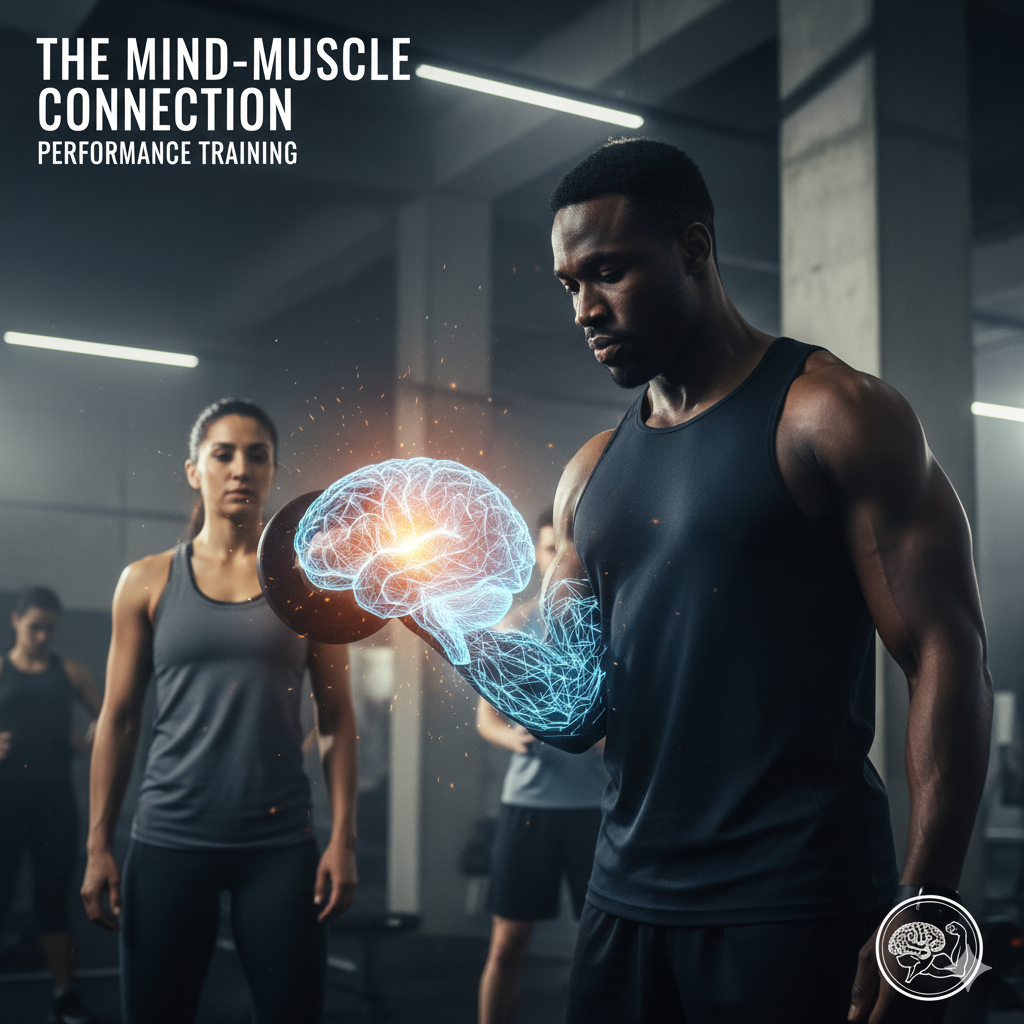
Unlock peak gains! Discover 5 powerful mind-muscle connection strategies to boost mental toughness, sharpen focus techniques, and break through overcoming plateaus in your training.
In the world of performance training, we often focus intensely on the physical—the weights, the reps, the sprints. Yet, a crucial, often underestimated, component lies between our ears: the mind. The mind-muscle connection is not just a vague concept; it’s a powerful psychological strategy that can dramatically enhance your physical output, accelerate gains, and elevate your overall athletic performance.
This connection involves consciously focusing on the muscle you are working, visualizing its contraction and extension during an exercise. It’s a key principle in performance psychology that bridges the gap between intention and execution.
Ready to unlock a new level of control and power? Here are 5 mental strategies to cultivate a stronger mind-muscle connection and boost your performance training.
1. Intentional Focus on the Target Muscle
Don’t just go through the motions; feel the action.
- The Strategy: Before each set, take a moment to mentally “feel” the muscle you intend to work. During the exercise, actively concentrate on contracting and stretching that specific muscle. Imagine it lengthening and shortening, rather than just moving the weight.
- Why It Matters: This focused intent sends a stronger signal to the targeted muscle fibers, increasing motor unit recruitment. This not only enhances muscle activation for better gains but also helps in overcoming plateaus by ensuring the right muscles are doing the work. Take a look at guaranteed correct score tips free and see what is free there
2. Visualization and Mental Rehearsal
Your brain can’t always tell the difference between vivid imagination and reality.
- The Strategy: Before a challenging lift, a sprint, or a complex movement, close your eyes and vividly imagine yourself performing it perfectly. Feel the muscles engage, see the flawless form, and experience the successful outcome. Rehearse every detail.
- Why It Matters: Visualization pre-activates the neural pathways involved in the actual movement, improving coordination, confidence, and execution. It’s a powerful tool for building mental toughness and optimizing technique without any physical strain.
3. Controlled Tempo and Pauses
Slowing down can actually make you stronger.
- The Strategy: Instead of rushing repetitions, control the eccentric (lowering) phase of an exercise, taking 2-4 seconds. Introduce a brief pause (1-2 seconds) at the point of peak contraction. This deliberate tempo forces continuous engagement with the target muscle.
- Why It Matters: A controlled tempo and strategic pauses eliminate momentum, forcing the muscle to work harder throughout the entire range of motion. This heightened time under tension and isolation are excellent focus techniques for forging a stronger mind-muscle connection.
4. Self-Talk and Affirmations
The voice in your head can be your greatest coach or your worst critic.
- The Strategy: Use positive and instructional self-talk. Instead of “I can’t lift this,” try “I am strong; I will push this.” During a difficult set, give yourself cues like “squeeze your glutes,” or “drive through your heels.”
- Why It Matters: Positive self-talk builds resilience and confidence, directly influencing your physical output. Instructional cues sharpen your focus techniques, ensuring optimal form and muscle engagement even when fatigued, a critical aspect of performance psychology.
5. Breathwork as an Anchor for Focus
Your breath is an immediate connection to your body and the present moment.
- The Strategy: Learn to synchronize your breath with your movements. Typically, exhale during the concentric (lifting/pushing) phase and inhale during the eccentric (lowering/resetting) phase. Between sets, use diaphragmatic breathing to regulate your heart rate and re-center your focus.
- Why It Matters: Intentional breathwork enhances stability (especially for core engagement), improves oxygen delivery to working muscles, and acts as a powerful anchor for your mind-muscle connection. It’s a simple yet profound way to manage fatigue and maintain clarity throughout your workout.
Train Your Brain, Transform Your Body!
The mind-muscle connection is not just an advanced technique; it’s a fundamental aspect of maximizing your potential in performance training. By consciously engaging your mind in every rep, set, and movement, you will not only see greater physical gains but also develop incredible mental resilience.
What mental strategy will you implement in your next training session? Share your commitment in the comments below!