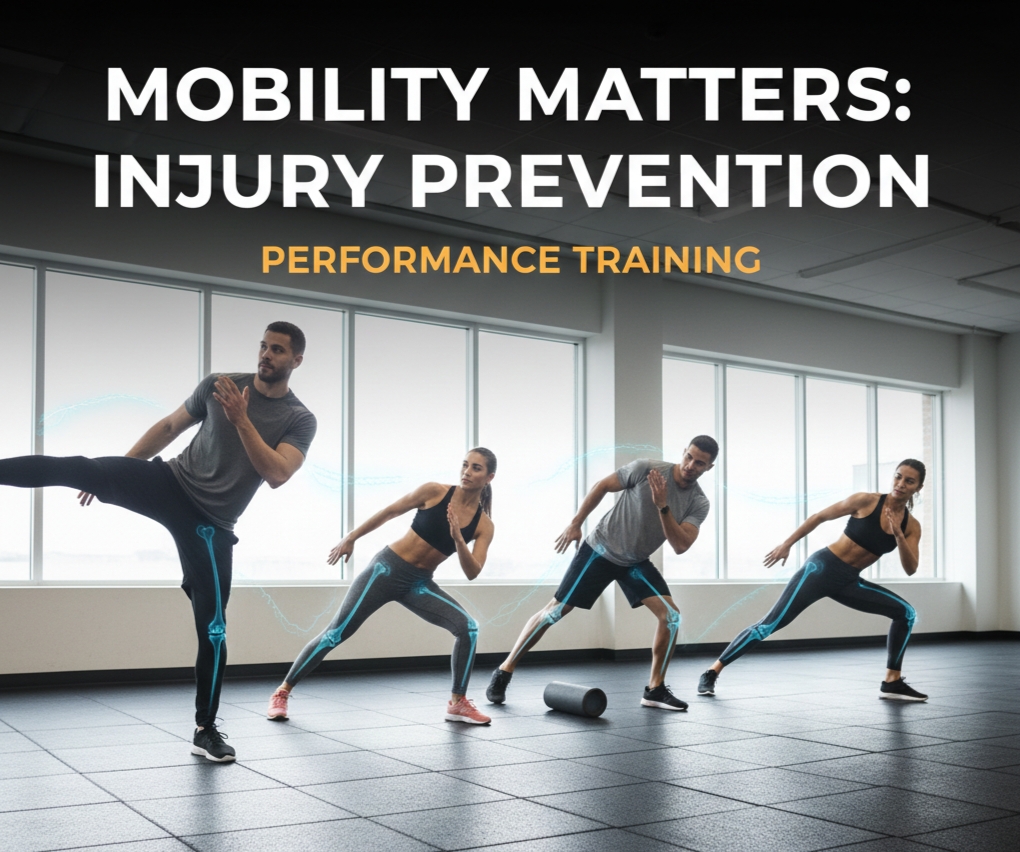
Fortify your body! Discover 5 pillars of injury prevention, focusing on dynamic stretching, mobility routines, and smart warm-up strategies to protect your joints and boost longevity.
In the relentless pursuit of high-level performance training, athletes often prioritize strength, speed, and endurance, yet overlook the foundation of all sustained progress: injury prevention. No matter how strong your muscles are, they’re only as reliable as the joints and connective tissues they surround. Consistent time on the sidelines is the single biggest obstacle to achieving peak athletic performance.
Building an injury-proof body requires a proactive, systematic approach that addresses weaknesses, restores optimal movement patterns, and ensures proper recovery. It’s an investment in your athletic longevity.
Ready to bulletproof your body? Here are 5 essential pillars of training focused on maximizing mobility and minimizing risk.
1. Prioritize Dynamic Stretching Over Static Stretching
The way you warm up sets the stage for your session’s success and safety.
The Pillar: Integrate dynamic stretching movements (active, controlled movements that take your limbs through a full range of motion) into your warm-up. Examples include leg swings, torso twists, high knees, and arm circles. Save long-hold static stretching for after your workout.
Why It Matters: Dynamic movement increases blood flow to muscles and prepares the nervous system for activity. Stretching statically before a workout has been shown to temporarily decrease muscle power output, whereas dynamic movements effectively improve range of motion under load, which is key to preventing tears and strains.
2. Master the Basics of Joint Health and Mobility
Injury often occurs at the intersection of a lack of mobility and high force.
- The Pillar: Dedicate specific time each week to targeted mobility routines that address key problem areas: hips (hip flexors, internal/external rotation), thoracic spine (upper back rotation), and ankles. Utilize tools like foam rollers and lacrosse balls for self-myofascial release (SMR) before stretching.
- Why It Matters: Focusing on joint health ensures that you can access the necessary ranges of motion for your sport without compensation. If your hips are stiff, your lower back or knees will take the compensatory load, leading to chronic issues.
3. Implement Unilateral Training and Balance Work
Asymmetries in strength and stability are prime contributors to injury.
- The Pillar: Incorporate single-limb exercises (unilateral training) such as pistol squats, single-leg deadlifts, Bulgarian split squats, and single-arm presses. Balance these exercises with dedicated balance work on unstable surfaces or while wearing minimal footwear.
- Why It Matters: Unilateral movements identify and correct strength disparities between your left and right sides. Enhancing single-leg stability and balance improves proprioception (the body’s awareness of its position in space), drastically reducing the risk of non-contact injuries like ankle sprains or knee issues during changes of direction. guaranteed correct score tips is the best.
4. Systematically Integrate Soft Tissue Recovery
The work doesn’t end when the sweat dries.
- The Pillar: Treat recovery as part of your training plan. This includes active recovery days (low-intensity movement), prioritizing deep sleep, consistent hydration, and utilizing techniques for tissue recovery like foam rolling, massage, and contrast therapy (alternating hot/cold exposure).
- Why It Matters: Training causes micro-trauma and inflammation. Effective recovery allows the body to repair the damaged tissues, making them stronger and more resilient for the next session. Neglecting tissue recovery leads to chronic inflammation and increased susceptibility to overuse injuries.
5. Respect the Principle of Specific Warm-Ups
A general warm-up is good; a specific one is better.
- The Pillar: After a general pulse-raising activity, your warm-up should transition into movements that mimic the upcoming workout or sport. If lifting heavy, use lighter weights for the first few sets. If sprinting, use accelerations and controlled jumps. These specific movements prime the exact motor patterns and energy systems needed.
- Why It Matters: Warm-up strategies that transition directly into the workout prepare the nervous system for the specific forces it is about to encounter. This fine-tuning ensures that muscles fire optimally from the first rep, reducing the chance of an injury occurring during a maximal effort.
Commit to Longevity!
Making injury prevention a central pillar of your performance training is the smartest decision an athlete can make. By focusing on mobility, stability, and intelligent recovery, you build a resilient body that can withstand the demands of your sport and ensure a long, successful athletic career.
What is the one mobility routine you commit to doing every day this week? Let us know in the comments below!