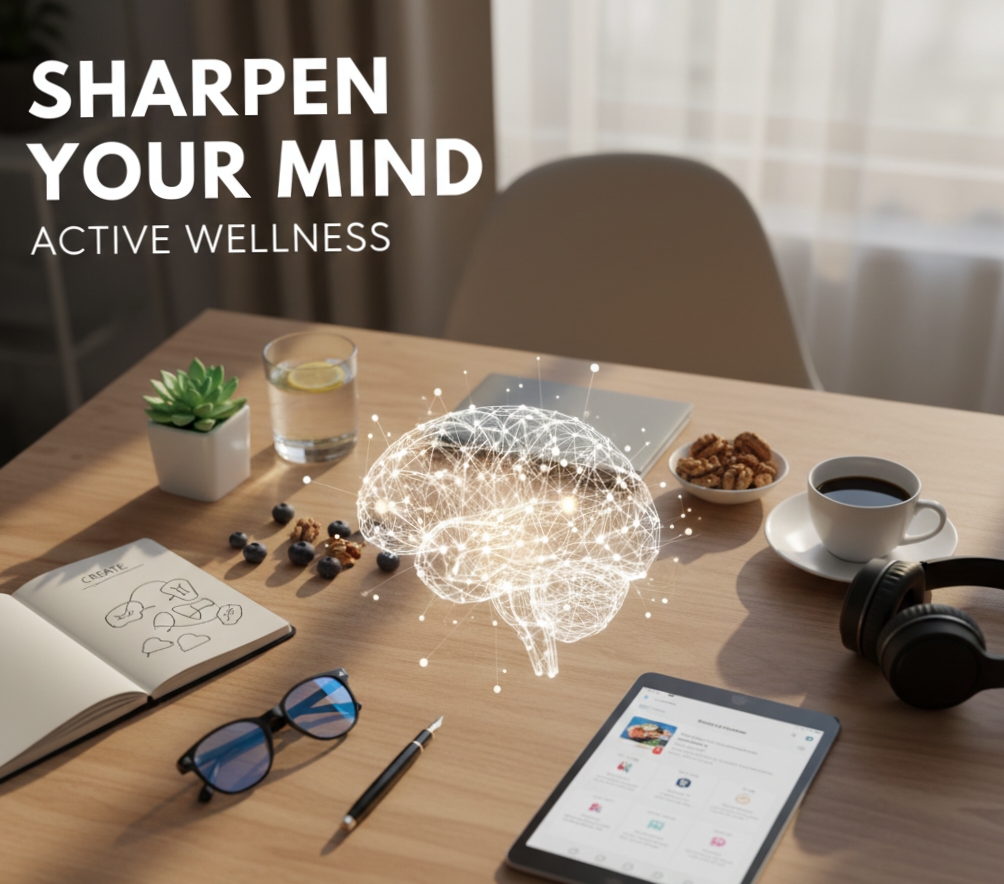
Enhance your cognitive fitness! Discover 5 daily brain health practices to boost memory, creativity, and mental clarity. Start your journey to mindful living today.
Active wellness isn’t confined to physical strength; it crucially involves the health and sharpness of your mind. Just like your muscles, your brain thrives on consistent exercise, nourishment, and rest. Maintaining cognitive fitness is key to longevity, creativity, and navigating the complexities of modern life with grace and efficiency.
Integrating specific brain health practices into your daily routine can enhance neuroplasticity—your brain’s ability to reorganize itself by forming new neural connections. These simple, powerful habits help preserve memory, improve focus, and sustain mental clarity.
Ready to give your brain a workout? Here are 5 essential daily practices for optimal cognitive wellness.
1. Embrace Novelty: The Power of New Experiences
Routine is comfortable, but the brain loves a challenge.
- The Habit: Regularly introduce small, new tasks or experiences into your day. Learn a new language app for ten minutes, take a different route home, try a new recipe, or pick up a puzzle or hobby that requires concentrated effort (like knitting or chess).
- Why It Matters: Learning and novel experiences force your brain to create and strengthen new neural pathways. This process, known as neuroplasticity, is crucial for maintaining a flexible, adaptable, and youthful mind. It’s the ultimate exercise for cognitive fitness.
2. Prioritize “Deep Work” Blocks: Sustained Focus
In an age of constant notification interruptions, sustained attention is a superpower.
- The Habit: Dedicate at least one hour each day to “deep work,” where you focus intensely on a single, cognitively demanding task without interruptions (no phone, no email). Use techniques like the Pomodoro Method to train your focus muscle.
- Why It Matters: Training your ability to concentrate for extended periods improves executive function and memory consolidation. By practicing intense, focused effort, you increase your capacity for complex thought and enhance overall mental clarity.
3. Feed Your Brain: Fueling Neurotransmitters
What you eat directly impacts your brain’s performance and mood.
- The Habit: Focus on a diet rich in Omega-3 fatty acids (found in fatty fish, walnuts, flaxseeds), antioxidants (berries, dark leafy greens), and B vitamins (eggs, legumes). Minimize processed sugars and excess saturated fats, which can lead to inflammation.
- Why It Matters: Specific nutrients are essential for building and maintaining healthy brain cells, regulating neurotransmitters (like serotonin and dopamine), and protecting against oxidative stress. Optimal nutrition is a core lifestyle choice for long-term brain health.
4. Take Intentional Naps or Breaks: Mental Reset
Rest is not a luxury; it’s essential for cognitive repair.
- The Habit: If you feel an afternoon slump, take a short, intentional “power nap” (20-30 minutes) or engage in a non-stimulating activity (like looking out the window or gentle stretching). Avoid scrolling through social media, as this keeps the brain engaged.
- Why It Matters: Brief periods of rest allow your brain to clear metabolic waste, consolidate memories, and refresh your attention reserves. It’s a vital part of mindful living that prevents burnout and ensures high-level cognitive function throughout the day.
5. Connect Socially: The Social Brain Workout
Meaningful social interaction is a powerful cognitive stimulant.
- The Habit: Make an effort to connect face-to-face or via meaningful calls with friends, family, or colleagues every day. Engage in conversations that require active listening, empathy, and quick verbal responses.
- Why It Matters: Social interaction challenges multiple areas of the brain simultaneously, including language, emotion recognition, and memory. It also releases mood-boosting hormones, directly supporting emotional health which is intrinsically linked to memory and overall cognitive function.
Invest in Your Head Start!
These brain health practices are simple steps that yield massive long-term dividends. By dedicating a few minutes each day to challenging and nourishing your mind, you are actively choosing a path of clarity, resilience, and enduring wellness.
What is one cognitive challenge you are ready to tackle this week? Let us know in the comments below!