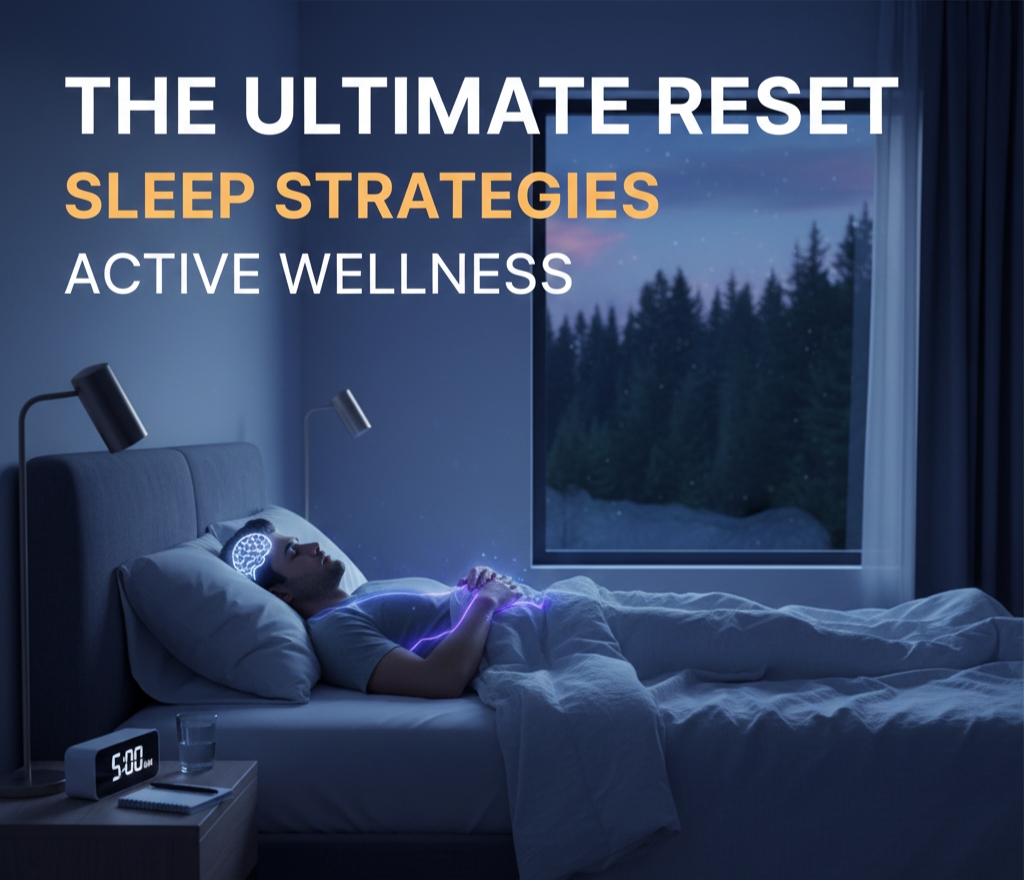
Unlock peak performance! Discover 5 essential sleep strategies for deep rest, improved recovery, and sustained active wellness. Optimize your sleep hygiene tonight!
In the pursuit of active wellness, we often focus intensely on what we do while we’re awake—our workouts, our nutrition, and our mindfulness practices. However, the most powerful tool for recovery, mental clarity, and physical repair happens when we are completely still: sleep.
Quality sleep is the ultimate form of active recovery. It is during deep rest that our body repairs muscle tissue, consolidates memories, balances hormones, and strengthens the immune system. Poor sleep hygiene doesn’t just make you tired; it actively degrades your performance and compromises your well-being.
Ready to transform your nights and revolutionize your days? Here are 5 essential sleep strategies to help you achieve profound, restorative quality sleep.
1. Establish a Non-Negotiable Wind-Down Routine
Your body needs a cue to transition from “doing” to “resting.”
- The Strategy: For the hour leading up to bedtime, engage in calming activities. This could include reading a physical book, gentle stretching, journaling, listening to soothing music, or taking a warm bath. The goal is to signal to your nervous system that it’s time to quiet down.
- Why It Matters: A consistent routine lowers cortisol (the stress hormone) and encourages the natural release of melatonin (the sleep hormone). This dramatically shortens the time it takes to fall asleep and improves overall sleep architecture, a cornerstone of good sleep hygiene.
2. Implement the “Light Control Rule”
Light exposure heavily dictates your circadian rhythm.
- The Strategy: In the final hours before sleep, dim the lights in your home, and minimize or completely eliminate exposure to blue light emitted by screens (phones, tablets, laptops). If necessary, use blue light filtering glasses or apps. Conversely, expose yourself to bright light immediately upon waking in the morning.
- Why It Matters: Blue light suppresses melatonin production, delaying your body’s natural sleep signal. Controlling light tells your body when it’s time for deep rest and helps align your internal clock for optimal nightly performance and daily energy.
3. Optimize Your Sleep Environment: The “Cave” Concept
Your bedroom should be designed purely for rest and relaxation.
- The Strategy: Follow the three crucial C’s: Cool, Quiet, and Comfortable. Ensure the room temperature is slightly cool (often cited around 60-67^\circ \text{F} or 15-19^\circ \text{C}), use blackout curtains or an eye mask for total darkness, and invest in a quality mattress and pillow that supports your body.
- Why It Matters: A cool, dark, and quiet environment prevents interruptions and encourages the body to enter the crucial deep stages of sleep where most physical and mental repair occurs. This is foundational for active recovery.
4. Be Consistent: The Fixed Wake-Up Time
Consistency is perhaps the single most important factor in improving sleep quality.
- The Strategy: Stick to the same wake-up time every day, including weekends. Your body’s circadian rhythm thrives on regularity. While a later bedtime is sometimes unavoidable, waking up at the same time helps solidify your sleep schedule.
- Why It Matters: Regularity reinforces your internal body clock, making it easier to fall asleep at night and wake up feeling refreshed. Prioritizing consistency is one of the most effective sleep strategies for regulating energy and enhancing performance and sleep.
5. Practice Mindful Disengagement from the Day
Mental restlessness is one of the biggest blockers to restful sleep.
- The Strategy: If you find your mind racing when you lie down, try a simple mental dumping technique. Keep a notebook next to your bed and jot down any lingering tasks, worries, or ideas. This frees your mind from the burden of remembering them. Follow this with a few minutes of controlled breath work (e.g., box breathing).
- Why It Matters: Actively offloading thoughts minimizes cognitive arousal, transitioning your brain from an active, problem-solving state to a relaxed state ready for deep rest. This simple ritual can be a powerful antidote to anxiety-induced sleeplessness.
Sleep Your Way to Success!
Sleep is not a passive activity—it is the bedrock of your health, mood, and performance. By committing to these simple sleep strategies, you are not just logging more hours; you are enhancing the quality of your life while you’re awake.
What is the one sleep habit you are going to focus on improving this week? Share your goal in the comments below!